
Make Laundry Day Easier With Better Laundry Room Storage
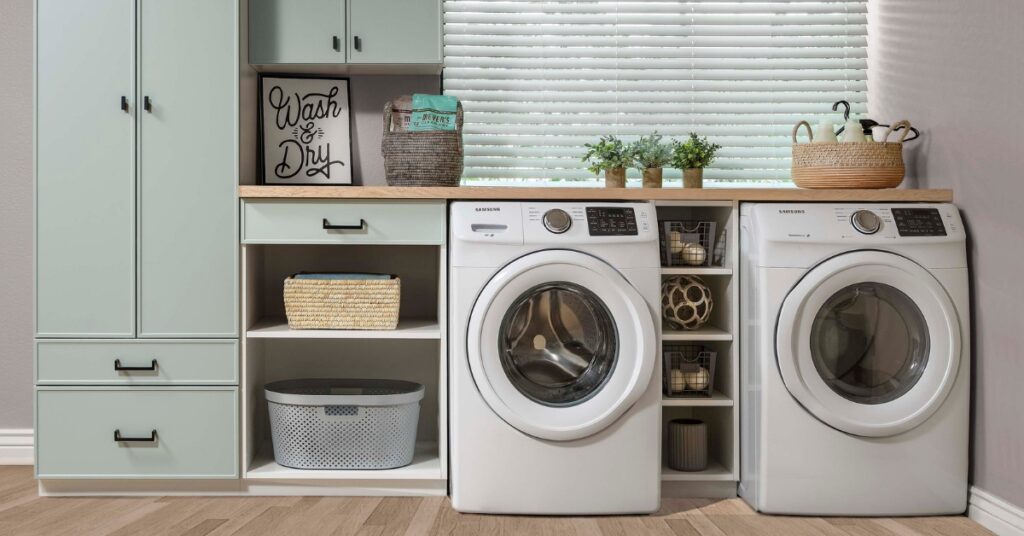
Table of Contents
Laundry is one of those household chores that never really ends. Between washing, drying, folding, sorting, and putting clothes away, even a relatively small household can spend a surprising amount of time managing laundry each week. Without proper storage, the process becomes even more frustrating. Detergent bottles crowd the countertops, clean clothes pile up waiting to be folded, and laundry baskets end up wherever there’s available floor space.
A well-organized laundry room can make the entire process more manageable. Custom laundry room cabinets, shelving, and built-in storage create dedicated areas for each part of the routine, reducing clutter and making everyday tasks easier. Instead of designing the room around the washer and dryer alone, homeowners can create a space that supports everything that happens before, during, and after each load.
Think About Your Entire Laundry Routine
Most laundry rooms are designed around two appliances: the washer and dryer. While these are obviously essential, they only handle part of the work. Clothes still need to be collected, sorted, treated for stains, folded, hung, and eventually returned to their closets or drawers.
When the room doesn’t accommodate these additional tasks, homeowners end up using nearby spaces to finish the job. Clean laundry might get folded on the bed, baskets collect in the hallway, and clothing that needs special attention gets left on top of the dryer.
Custom laundry room storage can help bring these activities together in one organized space. The goal is to make each step easier without making you constantly move laundry and supplies from room to room.
Create a Natural Flow From Washing to Folding
Consider the order in which you typically handle laundry. Dirty clothes arrive in baskets, get separated into loads, move through the washer and dryer, and then need a place to go before you put them away.
A thoughtful laundry room layout supports this progression. Place sorting areas near the washer, and countertops or folding surfaces near the dryer. Cabinets and shelving keep the supplies needed for each task within reach.
Even small adjustments to the room’s organization can reduce unnecessary movement and make laundry day feel less chaotic.
Give Laundry Supplies a Dedicated Storage Area
Detergent, fabric softener, stain removers, dryer sheets, and other cleaning products can quickly take over a laundry room. Without designated storage, these supplies often end up on top of appliances, along windowsills, or scattered across whatever counter space is available.
Custom laundry cabinets provide a more organized way to store these products while keeping work surfaces clear. Instead of having everything visible, homeowners can group related supplies in cabinets or drawers based on how frequently they’re used.
Keep Everyday Products Convenient
Store frequently used laundry products somewhere easy to access. Cabinets near the washer can hold detergent and stain treatments, while nearby drawers or shelves can accommodate smaller accessories.
Less frequently used products, such as specialty cleaners or seasonal laundry supplies, can be stored in upper cabinets. This keeps the most accessible areas available for items you reach for every week.
If you have young children or pets, cleaning products should be kept in secure storage according to their safety instructions. Convenience is important, but it should never come at the expense of household safety.
Make Room for Sorting Laundry Before Washing
One of the most common frustrations in a laundry room is having nowhere to put dirty clothes while preparing loads. Baskets end up on the floor, clothing gets separated into piles, and the room becomes difficult to move around in.
Dedicated sorting storage helps keep this part of the process organized. Rather than moving baskets around every time you need to access the washer or dryer, custom cabinetry can incorporate designated spaces for laundry hampers or removable baskets.
Separate Laundry Without Creating Floor Clutter
Some households prefer separating clothing by color, while others organize loads by fabric type, family member, or washing requirements. Whatever your approach, having a consistent sorting system can simplify the process.
Built-in hamper compartments or designated basket storage can help keep these categories separated without leaving multiple containers scattered throughout the room. Removable baskets also make it easier to transport clothing between bedrooms and the laundry area.
For larger families, this type of organization can be especially helpful because laundry is often being collected and washed throughout the week rather than on a single designated day.
A Folding Station Can Make a Big Difference
Folding clothes is one of the most space-consuming parts of doing laundry. Without a suitable work surface, homeowners often resort to folding on top of the dryer, carrying clothes into another room, or leaving clean laundry in baskets until they have time to deal with it.
A dedicated folding station gives clean clothes somewhere to go immediately after drying. This makes it easier to finish each load before starting another, helping prevent laundry from piling up around the house.
Use Countertop Space More Efficiently
A folding surface doesn’t necessarily require a large laundry room. Depending on the layout, a countertop can be installed above front-loading appliances, alongside cabinetry, or across an available wall.
The most useful folding areas provide enough room to handle clothing while keeping nearby storage comfortably accessible. Drawers and cabinets beneath the countertop can hold laundry accessories, while upper shelving can provide space for baskets or supplies.
For homeowners who regularly fold several loads at once, having a consistent work surface can make the process noticeably more convenient.
Plan Storage for Clothing That Needs Special Care
Not every garment can go directly from the washer into the dryer. Delicate fabrics, certain athletic clothing, and other items may need to air-dry or receive special treatment.
Without a designated area for these clothes, they often end up hanging from shower rods, doorframes, or other improvised locations around the home.
A laundry room designed around your routine can include space to hang garments and organize items that need extra attention.
Add a Place to Hang Clothes
A hanging rod can be a useful addition to a custom laundry room. It provides a convenient place to hang freshly washed clothing, air-dry suitable garments, or temporarily store items before transferring them to a closet.
The rod should be positioned where hanging clothes won’t interfere with appliance doors, cabinets, or walking space. Depending on the room’s dimensions, it may fit beneath upper cabinets or within a dedicated storage section.
For garments that need to dry flat, a suitable drying surface or rack may also be useful. Consider these needs during the design process rather than trying to find space after the cabinetry is installed.
Use Vertical Storage to Free Up Floor Space
Laundry rooms are often smaller than other utility spaces in the home, which makes efficient storage especially important. When cabinets, baskets, and supplies occupy too much floor space, even routine tasks can become inconvenient.
Vertical storage allows homeowners to make better use of the walls surrounding their appliances. Upper cabinets, open shelving, and tall storage compartments can accommodate a variety of household items without requiring additional freestanding units.
Upper Cabinets Keep Supplies Organized
The space above a washer and dryer is frequently underused, particularly in laundry rooms with standard side-by-side appliances. Custom upper cabinets can store detergents, cleaning supplies, extra towels, and other items that don’t need to stay on the countertop.
Cabinet height and depth should be planned carefully to maintain comfortable access and any necessary appliance clearances. The goal is to create useful storage without making it difficult to operate or maintain the machines.
Tall Cabinets Can Handle Larger Household Items
If the laundry room has enough available wall space, a tall cabinet can provide storage for larger items such as cleaning tools, spare household supplies, or extra linens.
These items can be difficult to organize in standard upper cabinets because of their dimensions. A dedicated tall storage section keeps them together and helps prevent the laundry room from becoming a collection point for miscellaneous household clutter.
Laundry Room Storage Should Fit Your Household
There’s no single laundry room layout that works for everyone. A household with young children may need substantial sorting space and easily accessible baskets, while someone who lives alone may prioritize a folding countertop and organized storage for cleaning products.
The size of the room also influences what’s practical. A spacious laundry room might accommodate multiple storage zones, while a compact laundry closet may benefit most from carefully planned upper cabinets and shelving.
Consider How Often You Do Laundry
If you wash several loads throughout the week, convenient access to supplies and folding space may be your biggest priorities. If you prefer handling laundry on one or two designated days, additional sorting and basket storage may be more useful.
Think about the parts of laundry day that currently create the most frustration. Are you constantly moving baskets out of the way? Do clean clothes accumulate because there’s nowhere to fold them? Are supplies difficult to reach or scattered across the room?
These everyday inconveniences can help identify where custom storage would make the greatest difference.
Don’t Forget Other Household Responsibilities
Many laundry rooms also serve as utility spaces. Depending on the home’s layout, they may be used to store cleaning products, pet supplies, extra paper goods, or household linens.
Custom cabinetry can accommodate these needs without interfering with laundry activities. Separating storage by purpose helps keep the room organized, even when it supports more than one household responsibility.
Custom Laundry Cabinets Create a More Practical Space
Standard cabinets and freestanding organizers can provide additional storage, but they may not make the best use of a laundry room’s available dimensions. Gaps between appliances, unusual wall configurations, and limited floor space can make it difficult to find storage products that fit comfortably.
Custom laundry room cabinets are designed around the room’s actual layout. You can plan shelving, drawers, hamper storage, and countertops together to create a cohesive system that supports your household’s routine.
This approach is particularly helpful when working with smaller spaces. Instead of filling the room with separate storage products, custom cabinetry can concentrate organization in the areas where it will be most useful.
A well-designed laundry room also considers practical details such as appliance access, ventilation, plumbing connections, and space needed for maintenance. Storage should improve the room’s functionality without making essential equipment harder to use.
A Better Laundry Room Makes Everyday Life Easier
You may never look forward to doing laundry, but the right storage can make the process considerably less frustrating. When supplies are organized, baskets have designated homes, and clean clothes have a place to be folded or hung, the routine becomes easier to manage.
The biggest improvement often comes from eliminating the small inconveniences that slow you down. You spend less time looking for supplies, moving baskets, or clearing space to finish a load. Over the course of a typical week, those improvements can make a noticeable difference in how smoothly the household operates.
Rather than treating the laundry room as a place for appliances alone, thoughtful storage turns it into a workspace designed around the tasks you perform there.
Design Custom Laundry Room Storage in Atlanta, Georgia
If your laundry room feels crowded, disorganized, or difficult to use, Closet Designs & More can help you make better use of the space. We design custom laundry room cabinets, shelving, and built-in storage solutions for homeowners throughout Metro Atlanta.
Whether you need dedicated hamper storage, a folding station, extra cabinetry, or a complete laundry room organization system, our team can design around your available space and daily routine. Using advanced 3D CAD design technology, we’ll help you visualize how your new storage will fit into the room before installation begins.
Schedule your complimentary consultation with Closet Designs & More today and discover how custom laundry room storage can make one of your home’s busiest spaces more organized, convenient, and functional.