
Is a Murphy Bed Right For Your Home?
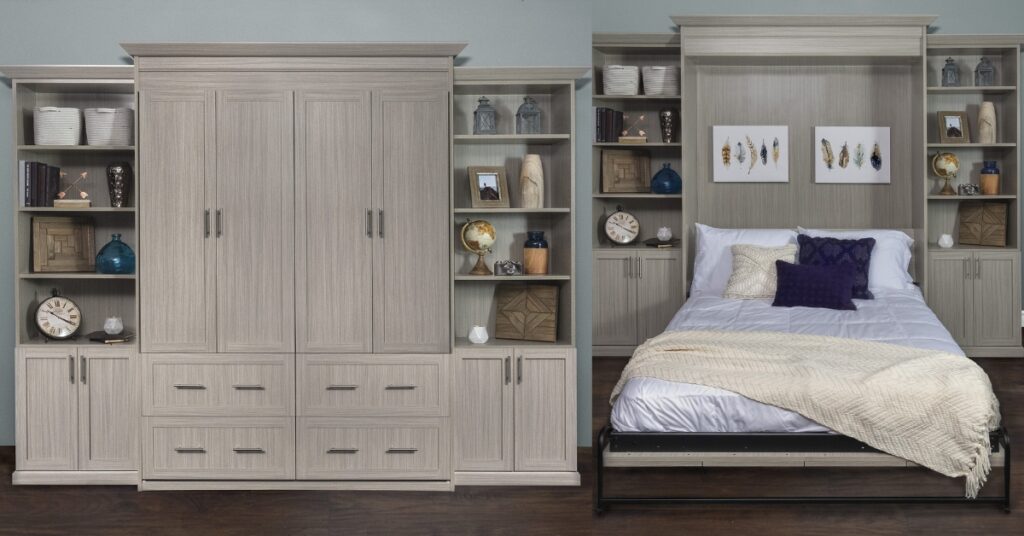
Table of Contents
A Murphy bed can be a practical alternative to a traditional bed when you need a room to serve more than one purpose. Instead of leaving a permanent bed in a space that’s only occasionally used for sleeping, a Murphy bed folds away when it’s not needed. This gives homeowners more flexibility without giving up the ability to comfortably accommodate overnight guests.
But a Murphy bed isn’t necessarily the right choice for every home. If a bedroom is used for sleeping every night and space isn’t a concern, a traditional bed may make more sense. The decision comes down to how often the bed will be used, what else you want to do with the room, and how much space you’re willing to dedicate to sleeping arrangements.
Before deciding between a Murphy bed and a traditional bed, consider the following questions to determine which option makes the most sense for your home.
1. How Often Will Someone Actually Sleep in the Room?
Start by thinking about how frequently the bed will be used. This is often the most important factor in deciding whether a Murphy bed is a good investment.
If you have a dedicated guest bedroom that only gets used a handful of times each year, a traditional bed is occupying valuable floor space for most of the year. Even when the room is empty, the bed determines how the space can be used.
A Murphy bed allows you to reclaim that space between visits. You can keep the room open for everyday activities and simply lower the bed when guests arrive.
What If the Bed Will Be Used Every Night?
Murphy beds can also be used for everyday sleeping, provided the bed and mattress are appropriate for regular use. However, it’s worth considering whether you’ll want to raise and lower the bed each day.
If the room is primarily a bedroom and you don’t need the additional floor space, a traditional bed may be more convenient. On the other hand, if you live in a smaller home or want the room to serve multiple purposes, the flexibility of a Murphy bed may outweigh the extra step of putting it away.
2. Do You Need the Room for Something Other Than Sleeping?
One of the clearest signs that a Murphy bed might be right for your home is having a room that needs to serve two different purposes.
Maybe you work from home and need a dedicated office, but you also want somewhere for visiting family to stay. Perhaps you have a hobby room, exercise area, or reading space that could occasionally accommodate overnight guests.
A traditional bed makes it difficult to use the same floor space for other activities. Even a smaller bed can dominate the layout, leaving limited room for desks, storage, or movement.
Think About How You Use the Room Most Days
Rather than designing the room around occasional guests, consider what you would like to use it for during a typical week.
If you spend five days working from home and only host overnight guests once a month, it makes sense to prioritize the office layout. A Murphy bed gives you the option to accommodate guests without requiring the room to function as a bedroom all the time.
This is where a custom Murphy bed system becomes particularly useful. Built-in cabinetry and shelving can be designed around the bed to provide storage for office supplies, books, personal belongings, or other items that support the room’s primary purpose.
3. Is a Traditional Bed Taking Up Too Much Space?
Even when a room is large enough for a traditional bed, that doesn’t necessarily mean the remaining space is easy to use. A queen-size bed, for example, occupies a substantial portion of the floor before accounting for nightstands, dressers, and walking clearance.
In a smaller bedroom, this can leave little room for anything else. The space may feel crowded even when it’s clean and organized.
A Murphy bed helps address this issue by allowing the sleeping area to be folded away when it’s not needed.
Consider the Room’s Layout, Not Just Its Size
Before choosing a Murphy bed, think about how the room is arranged. Doors, windows, closets, and other permanent features can affect where the bed can be installed and how it operates.
You’ll also need sufficient clearance for the bed to lower completely and for someone to move comfortably around it when it’s open. Ceiling height and available wall space are important considerations as well.
A custom design consultation can help determine whether the room can accommodate a Murphy bed and which configuration would make the best use of the available space.
4. Would You Benefit From Additional Built-In Storage?
If you’re considering a Murphy bed, it’s worth thinking beyond the bed itself. The surrounding wall space can often be used for storage that makes the entire room more functional.
A custom Murphy bed system can incorporate cabinetry, drawers, and shelving to help organize belongings without requiring multiple freestanding pieces.
This is especially helpful in rooms that already have limited closet space or need to accommodate several activities.
What Would You Want to Store?
The answer depends on how you plan to use the room.
In a home office, surrounding cabinetry might hold paperwork, electronics, books, and office supplies. In a guest room, cabinets could provide space for extra bedding, pillows, towels, and visitors’ belongings.
If the room doubles as a hobby space, built-in storage can keep supplies organized and out of sight when guests arrive.
By planning the bed and storage together, homeowners can create a more cohesive layout rather than trying to fit separate pieces into the room afterward.
5. Are You Comfortable With a Bed That Folds Away?
Murphy beds are designed to make transitioning between sleeping and everyday use relatively straightforward, but they still require some interaction.
Before choosing one, consider whether raising and lowering the bed fits comfortably into your routine. This is especially important if the bed will be used frequently or by someone who may have difficulty operating it.
Consider Who Will Be Using the Bed
For an occasional guest room, opening the bed before visitors arrive may be a simple task. For daily sleeping, you’ll want to consider how convenient the operation feels and whether the bed’s mechanism is appropriate for the intended user.
A properly installed Murphy bed should be operated according to the manufacturer’s instructions, including any requirements for securing the bed and keeping the surrounding area clear.
You should also consider mattress compatibility. Murphy bed systems have specific requirements for mattress dimensions, thickness, and weight, so not every mattress will necessarily be suitable.
6. Do You Want the Room to Look Finished When the Bed Is Closed?
A traditional bed makes a room look and function like a bedroom, even when nobody is sleeping there. A Murphy bed offers an opportunity to create a different appearance when the bed is stored.
With custom cabinetry, the closed bed can blend into a larger built-in storage system. This allows the room to maintain the appearance of a home office, study, or multipurpose space rather than looking like a guest bedroom with furniture pushed to the sides.
Make the Design Feel Like Part of Your Home
A custom Murphy bed system can be planned around the room’s existing style, including cabinet finishes, shelving arrangements, and surrounding storage.
For example, a wall of cabinetry with integrated bookshelves can create an attractive backdrop for a home office. When guests arrive, the bed opens to provide sleeping accommodations without requiring major changes to the room.
The result is a space that feels intentionally designed for both uses.
7. Are You Planning for Your Home’s Changing Needs?
Your household’s needs may look different five or ten years from now. A room that’s currently used as a guest bedroom might eventually become a home office, hobby room, or space for a family member.
When choosing between a Murphy bed and a traditional bed, consider how likely it is that you’ll want the room to change functions in the future.
A Murphy bed can provide flexibility by allowing sleeping accommodations to remain available without permanently dedicating the room to that purpose.
That flexibility can be particularly useful for homeowners who expect their routines, work arrangements, or family needs to evolve.
Murphy Bed vs. Traditional Bed: Which Makes More Sense?
After considering how you’ll use the room, the decision usually becomes clearer. Neither option is automatically better. The right choice depends on your priorities.
| Consideration | Murphy Bed | Traditional Bed |
|---|---|---|
| Occasional overnight guests | Excellent option | Practical, but occupies space year-round |
| Daily sleeping | Possible with a suitable system | Often more convenient |
| Multipurpose rooms | Allows floor space to be reclaimed | Limits flexibility |
| Small rooms | Can improve usable floor space | May dominate the layout |
| Built-in storage | Can integrate with custom cabinetry | Usually requires separate storage |
| Daily setup | Must be raised and lowered to reclaim space | Always ready for use |
| Installation | Requires appropriate wall or floor anchoring and professional installation | Usually simpler to set up |
A Murphy bed is often the stronger choice when the room serves another important purpose during the day. A traditional bed generally makes more sense when sleeping is the room’s primary function and there’s no need to reclaim floor space.
A Quick Checklist Before Choosing a Murphy Bed
If you’re still deciding, review these questions based on your household’s needs.
The room is used for sleeping only occasionally.
I’d like to use the room as an office, hobby space, or multipurpose area.
A traditional bed takes up more floor space than I’d prefer.
Additional built-in cabinetry or shelving would be useful.
I’m comfortable opening and closing the bed when needed.
The room has suitable wall space and clearance for a Murphy bed.
I want the room to look like something other than a bedroom when guests aren’t visiting.
Flexibility will be important as my household’s needs change.
You don’t need to check every box. However, if several of these situations sound familiar, a Murphy bed may be worth considering. The biggest question is whether you would get more everyday use out of the room if the bed weren’t permanently occupying the floor.
Make Your Space Work for the Way You Live
It’s easy to get accustomed to having a spare bedroom that rarely gets used. The bed stays in place, the room collects miscellaneous belongings, and the space becomes something you walk past rather than enjoy.
A Murphy bed offers a way to rethink that arrangement. Instead of dedicating an entire room to occasional sleeping, you can create a space that serves your everyday needs while remaining ready for guests. Of course, the bed itself is only one part of the design. Thoughtful cabinetry, shelving, and storage help ensure the room stays organized and functions well in both configurations.
Explore Custom Murphy Beds in Atlanta, Georgia
If you’re considering replacing a traditional bed with a Murphy bed, Closet Designs & More can help you determine how the change could work in your home.
We design custom Murphy bed and built-in storage solutions for homeowners throughout Metro Atlanta. Whether you’re converting a spare bedroom into a home office, creating a flexible guest room, or making better use of a smaller space, our team can help plan a layout around your needs.
Using advanced 3D CAD design technology, we’ll help you visualize how your Murphy bed and surrounding cabinetry will fit into the room before installation begins. Schedule your complimentary consultation with Closet Designs & More today to explore whether a custom Murphy bed is the right fit for your home.